
A generic probiotic may be useful for some people, but more bacteria does not necessarily mean better results. Probiotic effects can depend on the specific strain, dose, formulation, and individual circumstances.
A more individual approach to gut health
Personalized Probiotics: Moving Beyond Generic Supplements
Probiotics are widely available in health-food stores and pharmacies. Yet choosing a probiotic is not always as simple as selecting the bottle with the highest number of bacterial strains. Different people have different diets, lifestyles, digestive environments, and microbiome profiles.
This has led to growing interest in personalized probiotics—an approach that uses microbiome information to make more informed decisions about gut-health support.
Individual microbiome information
Strain-specific probiotic considerations
Gut and cellular health research

Important context: Microbiome testing can provide useful biological information, but it does not establish one universally ideal microbiome or automatically determine which probiotic a person should take. Interpretation should consider individual circumstances and professional guidance.

Understanding personalized probiotics
What Are Personalized Probiotics?
Personalized probiotics are probiotic strategies designed around an individual's health information rather than a one-size-fits-all approach.
A microbiome test can provide information about the microorganisms detected in a person's sample. Depending on the testing method, a report may provide information about microbial composition, diversity, and specific bacterial groups.
This information can help people discuss their digestive health with a qualified healthcare professional and consider whether dietary or probiotic changes may be appropriate.
However, microbiome testing should not be viewed as a diagnostic tool for every digestive or health concern. The science is still developing, and researchers have not established one ideal microbiome that applies to every person.
More strains are not automatically better
Why Not Simply Choose a Generic Probiotic?
Probiotic effects can depend on more than the number printed on the front of a supplement bottle.
A product containing ten strains is not automatically superior to one containing three. This is one reason testing can be useful when consumers want more individual information before considering a supplement.
The goal is not necessarily to eliminate every bacterial difference. A healthy microbiome naturally contains a diverse community of microorganisms, and individual profiles can vary.
Instead of choosing a probiotic based solely on marketing claims, consumers can first gather information about their individual microbiome and then discuss appropriate options with a healthcare professional.
Beyond digestion
The Microbiome and Cellular Health
The gut does more than support digestion. The microbiome interacts with the immune system and contributes to the production and transformation of metabolites that can influence biological processes throughout the body.
Researchers are also investigating connections between the microbiome, methylation pathways, metabolism, and cellular energy.
Methylation refers to chemical reactions in which methyl groups are transferred between molecules. These reactions are involved in many biological processes, including the regulation of gene expression and the metabolism of certain nutrients.
The relationship between gut microorganisms and methylation is complex, however. It would be too strong to claim that taking a particular probiotic directly "optimizes" the methylation cycle. Instead, current research suggests that microbial metabolism can interact with pathways involved in host metabolism.


Microbial metabolites and metabolism
Gut Health and Cellular Energy
The microbiome may also influence metabolic processes connected with cellular energy.
Certain microorganisms produce metabolites that can interact with host cells and metabolic pathways. Researchers are studying whether these interactions contribute to metabolic health and healthy ageing.
This is particularly interesting for people researching longevity because cellular energy production involves several interconnected systems. However, the relationship between microbiome composition and human longevity remains an active area of research.
A microbiome test can provide additional information, but it cannot tell someone exactly how their cells are ageing or guarantee a particular health outcome.
NMN and NAD+ metabolism
Where Does NMN Fit In?
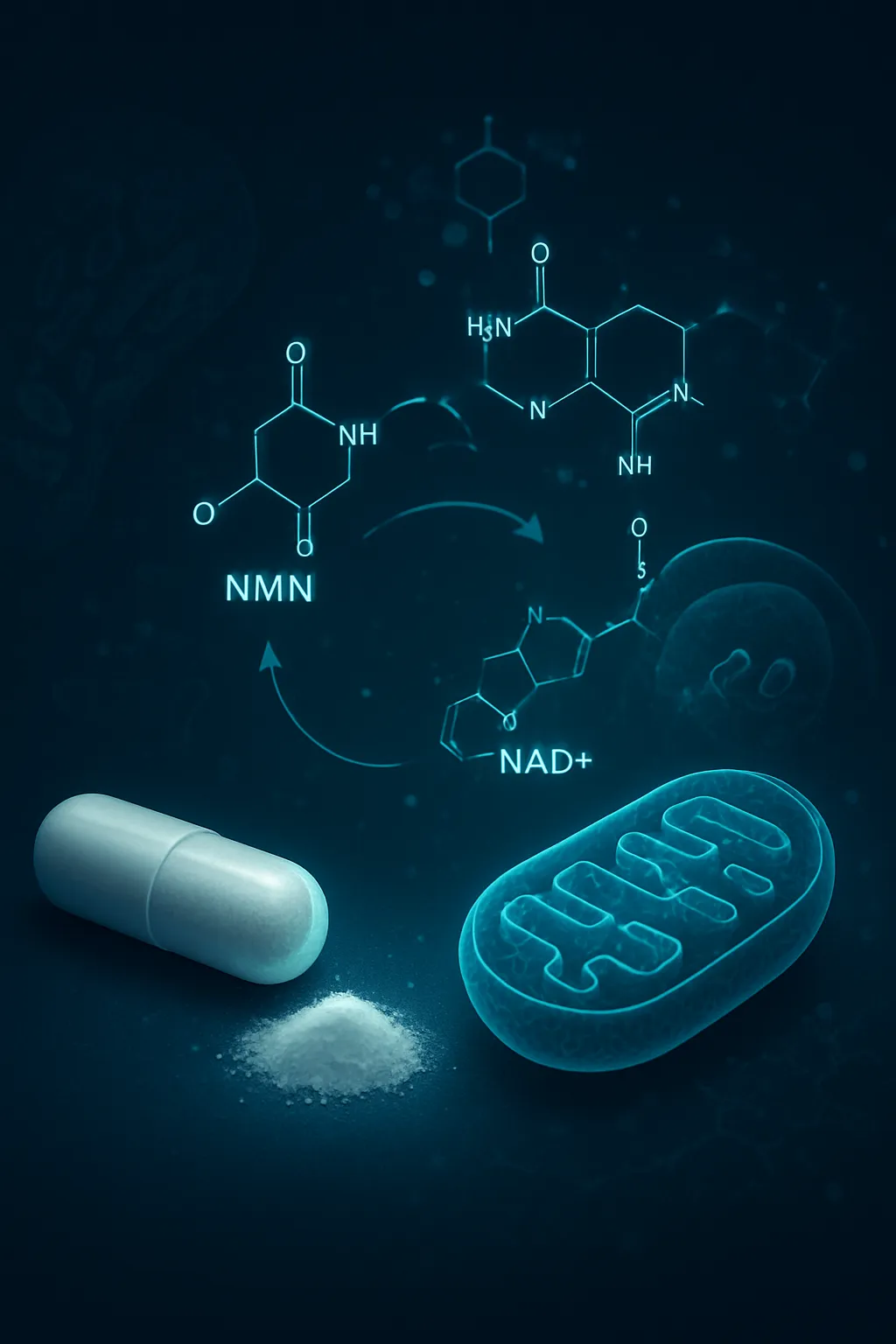
NMN, or nicotinamide mononucleotide, is involved in the biosynthesis of NAD+, an important cellular cofactor.
NAD+ participates in numerous biological processes, including cellular metabolism and energy-related pathways. This is one reason NMN has attracted attention in longevity research.
However, NMN should not be described as a treatment for cellular damage or as a guaranteed method of "cellular repair." Human research into NMN continues to develop, and evidence for specific long-term health outcomes remains limited.
For consumers interested in NMN Supplements in Canada, it makes sense to evaluate NMN as one component of a broader wellness strategy rather than treating it as a replacement for nutrition, exercise, sleep, or medical care.
You can also explore Longevity Supplements in Canada for additional information about supplements commonly discussed in healthy-ageing research.
A measured approach
Testing Before Supplementing
One advantage of testing is that it encourages people to gather information before immediately adding several products to their routine.
Consider your goals
Consider your health and dietary goals before deciding whether microbiome testing or probiotic supplementation is relevant.
Complete an appropriate test
Complete an appropriate microbiome test when the information it provides is relevant to the questions you want to explore.
Review the results
Review the results with a qualified professional who can place microbiome findings within a wider health context.
Consider lifestyle first
Consider appropriate dietary and lifestyle changes before assuming supplementation is the necessary first step.
Choose carefully
Choose a probiotic product if appropriate, considering the strain, dose, formulation, and your individual circumstances.
Monitor your response
Monitor how you respond over time rather than assuming that every probiotic will produce the same result.
This approach does not guarantee better results, but it can reduce the temptation to choose supplements based solely on advertising.
For people taking medication, genetic information can sometimes provide additional context. Pharmacogenetic testing examines genetic variations that may influence how an individual responds to certain medications.
It is important to understand that pharmacogenetic testing is primarily concerned with medication response. It should not be presented as a test that determines which probiotic or supplement everyone should take.
The future of gut-health research
A More Individual Approach to Gut Health
The future of gut-health research may involve increasingly personalised approaches. As researchers learn more about individual microbiomes, microbial metabolites, diet, genetics, and metabolism, recommendations may become more targeted.
You can also explore Longevity Supplements in Canada for additional information about supplements commonly discussed in healthy-ageing research.